
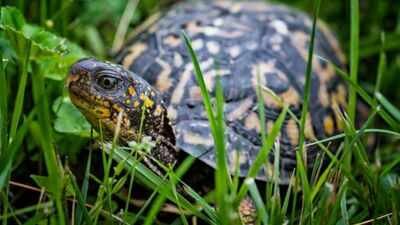
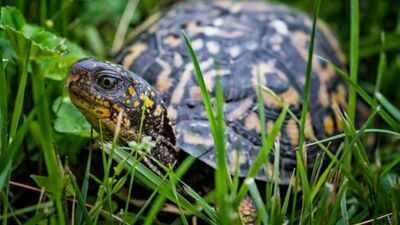
Alongside the 1,100-acre plot of the Perry Nuclear Power Plant, small black shells with yellow dots are often found slowly making their way through the land. On Lake Erie’s south-central shore, where brown water and a mud of wetland exist, a new resident has shelled up.This event comes up as a little surprise, as Ohio has lost about 90% of the wetlands it had two centuries ago. In July 2025, the Nuclear Regulatory Commission approved another 20 years of operation for Perry, extending the plant’s license through November 7, 2046. The surrounding property was assembled for industrial and regulatory reasons, but for a slow-growing turtle, it may provide space and time.
A sudden refuge
Perry is a 1,268 megawatt boiling-water reactor about 40 miles northeast of Cleveland. Vistra says more than 850 acres of forest and marsh on the property are preserved as part of a certified Urban Wildlife Sanctuary, which was certified in 1993.Nuclear siting rules require an exclusion area where the licensee can control activities, but they do not require every wooded acre on a plant site to remain wild. At Perry, the result was a mix of controlled land, low development pressure, and a later decision to preserve much of the property.The long pause in development has had visible results. Site surveys have reported herons, kingfishers and a rare crane fly orchid, turning land held for a power plant into habitat for species.
A group of slow turtles
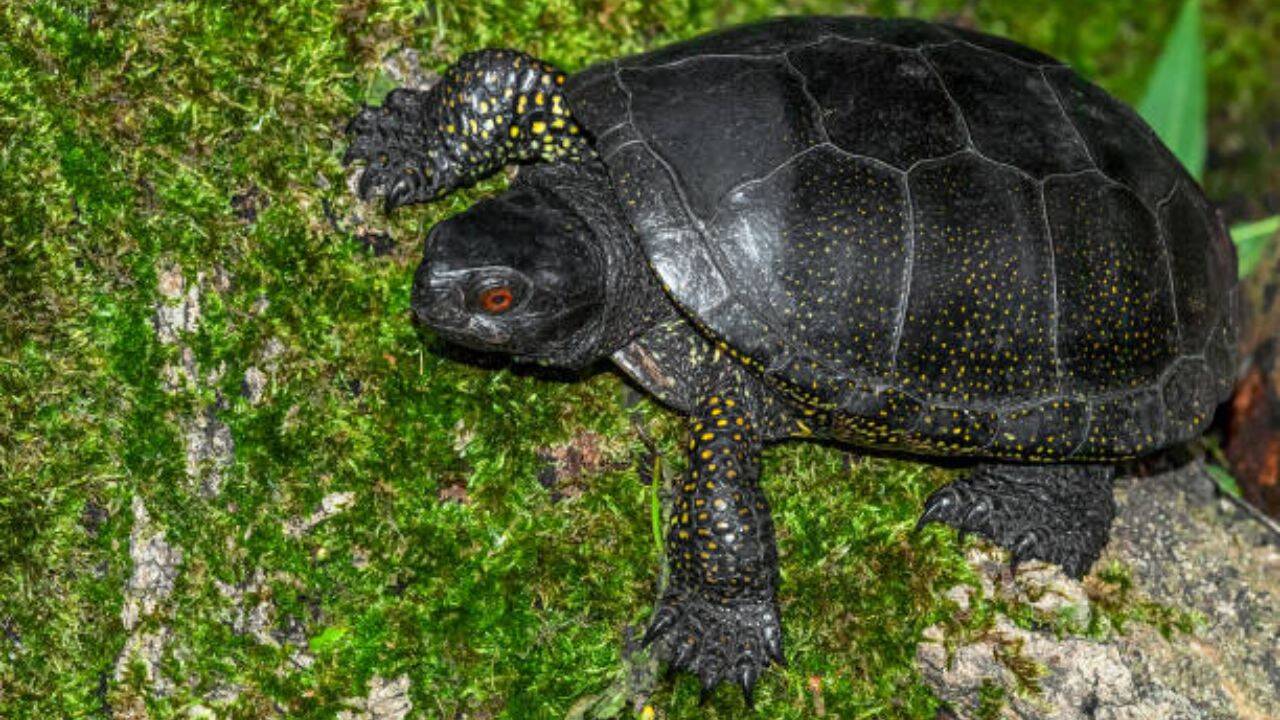
Within Ohio, spotted turtles have been classified as threatened.
Spotted turtles usually grow only 3.4 to 4.5 inches long and they favour shallow water with abundant vegetation. Their life cycle is what makes every surviving adult unusually important. Females lay only two to eight eggs and the species may not reach maturity until 7 to 14 years of age. Habitat loss, fragmentation, and illegal collection can therefore remove turtles much faster than a local population can replace them.Within Ohio, spotted turtles have been classified as threatened. Federal protection is different, since the U.S. Fish and Wildlife Service concluded in September 2025 that an Endangered Species Act listing was “not warranted at this time.” That finding did not erase the pressures the agency identifies, including wetland loss, fragmentation, changing hydrology, and collection for the pet trade.Vistra’s renewed license allows Perry to operate through 2046. During this time, a turtle may spend up to 14 years reaching reproductive age, transforming from a hatchling to a breeding adult. While this is twenty extra years for a business plant, it means an entire generation for the turtles.
Ohio’s lost wetlands
According to US Geological Survey, Ohio’s wetlands went from roughly 5 million acres to about 483,000 acres over the past two centuries. Here, conversion for agriculture has been identified as the main cause. While one might believe what has been transformed is just soggy ground, in reality, it was a connected network of shallow water, wet meadows and seasonal pools.What remains is often fragmented by roads, farms, and development. Spotted turtles use shallow wetlands with vegetation, but they also move onto nearby land, particularly during spring. A marsh can look intact on a map and still function like an island when the next safe pool lies across lanes of traffic.Wetlands also store floodwater, moderate streamflow, and provide breeding and feeding areas for wildlife. Losing them can make floods and dry periods harder to manage while squeezing animals into fewer places.While Perry is not the long-term solution, it provides a buffer for nature and its members. It is an example of what happens when nature is left to exist and human construction stays out.