

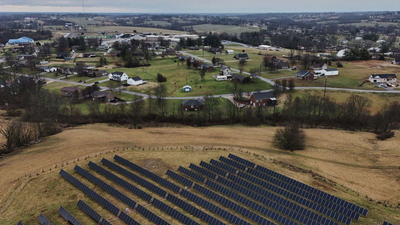
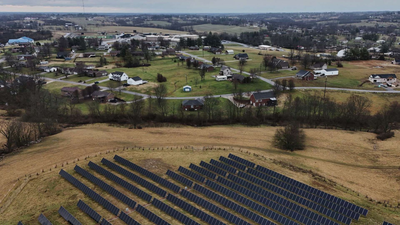
An Ohio farmer facing $1 million (£750,000) in medical bills had to sell land and farm machinery from his family farm after local officials blocked a solar energy project on his property. Wayne Greier, a sixth-generation farmer in Mahoning County, Ohio, planned to lease 600 acres of his farmland to a solar development company in 2021. The deal would have paid him $540,000 a year in lease payments, giving him a vital source of money as debt threatened his livelihood. “It was our saving grace,” Greier told the Associated Press. “It wasn’t a scary picture that everybody likes to paint about solar and the loss of farmland.” The deal fell apart after township officials put local restrictions in place under a state law, stopping the renewable energy project from moving forward. Losing the income left Greier unable to keep his full farming operation running. He was forced to sell assets to pay growing debts and satisfy creditors.
A medical crisis turned financial strain
Greier’s financial problems began during a serious battle with COVID-19 and other health problems. According to Farm Progress, he spent 40 days in the hospital, had seven abdominal surgeries, and built up $1 million in medical debt. When an energy developer approached him in 2021 about putting solar panels on part of his 1,000-acre property, Greier saw a chance to protect his family’s future. His land already had high-voltage power transmission lines, which made it a good place to connect a solar project to the power grid. But local opposition grew quickly as residents organized against large renewable energy projects. The opposition soon became personal. According to Farm Progress, Greier said opponents protested outside his home, spread rumors that solar panels would poison local drinking water, and targeted his children at school. “All of a sudden, this mob was created that was anti-solar,” Greier said in his interview with Farm Progress. “And they surrounded my house with signs. And people were telling me to move out of the community, and I had to pull my kids out of school because the other kids were saying that we were going to ruin everybody else’s drinking water, and we were going to ruin the community. It was really bad. I went through a really dark time because of that.”
Statutory bans derail renewable deals
In 2021, Ohio lawmakers passed Senate Bill 52. The law gave county commissioners and township authorities broad powers to create restricted areas, allowing local officials to block large wind and solar projects on private farmland. Green Township trustees later voted to ban commercial solar and wind projects. Because Greier’s developer had not finished a formal impact study with the Ohio Power Siting Board before the local ban took effect, the project was stopped. “I was the one that was going to lose the sixth-generation farm. I was the one that couldn’t provide for my family,” Greier told the Associated Press. The decision caused immediate financial trouble. Facing threats of foreclosure from banks, Greier sold parts of his land and important farm equipment. This included a 24-row planter, tillage machinery, and a deep ripper. He also returned leased tractors.
Advocacy for property rights
After the project collapsed, Greier became a strong advocate for farmers’ land rights across the region. He regularly shares his experience with state lawmakers, industry groups, and farming communities. He argues that landowners should be able to decide how to earn money from their own property. “After all this happened, I decided that I would advocate any way possible so that nobody has to go through what I did and to prevent this in the future,” Greier told Farm Progress. Greier sees the situation as a larger fight over property rights. He believes selling energy from private land is no different from growing crops or raising livestock, especially for family farms that need financial independence. “There’s families that are relying on this and looking for this,” he told the Associated Press. “And it’s been taken away, this opportunity.”
Rebuilding through shared labor
Even after losing equipment and cutting back his main grain operation, Greier remains on his historic family farmland. His father’s ashes are scattered on the property, which is one reason he has chosen to stay instead of moving. To earn a living, Greier leased his remaining acreage to another local farmer while working on the land as a paid worker. He operates heavy equipment, manages grain sales, and raises livestock, including sheep, goats, and beef cattle. The arrangement has also allowed him to work alongside his 13-year-old son, Blake, helping keep their family connection to the farm alive. “He got to follow in my footsteps, and that feels good,” Greier told Farm Progress.