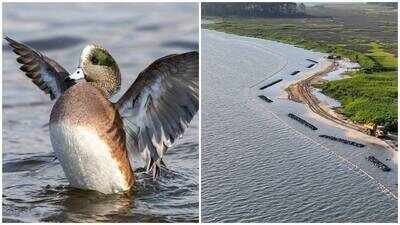
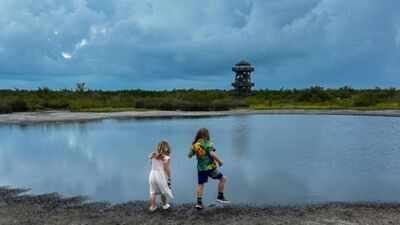
Florida spent about $17 million transforming degraded farmland near Tampa Bay into Robinson Preserve, a 700-acre coastal refuge that now draws about 240,000 visitors annually

Florida spent about $17 million transforming degraded farmland near Tampa Bay into Robinson Preserve, a 700-acre coastal refuge that now draws about 240,000 visitors annually

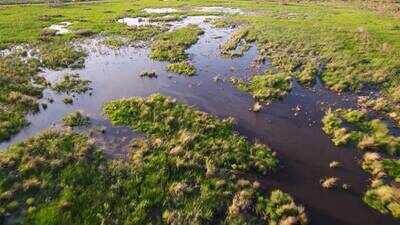
Robinson PreservePhoto credit: Lindsay Rosegger/NOAA Fisheries On the edge of Tampa Bay, where mangrove forests meet open water and birds call from the treetops, lies a place that was never meant to exist. Robinson Preserve, a 700-acre coastal refuge in Manatee County, Florida, was once degraded farmland slated for development. Today, it is a thriving…
Read More
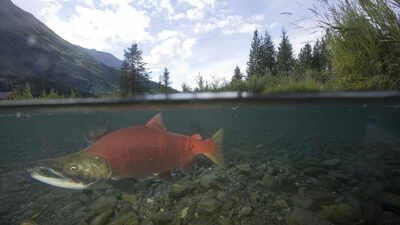
In 2006, Alaska began rebuilding a creek damaged by decades of gold mining; the first restored stretch was followed by a six-fold rise in salmon runs

In 2006, Alaska began rebuilding a creek damaged by decades of gold mining; the first restored stretch was followed by a six-fold rise in salmon runs

Resurrection Creek, near the small town of Hope in Southcentral Alaska, has a long history of gold mining. Image: U.S. Forest Service For decades, gold mining has done more than alter the scenery around Resurrection Creek in Alaska, it has changed the creek itself. Degradation of riverbanks, alteration of stream channels and loss of wetlands…

Read More
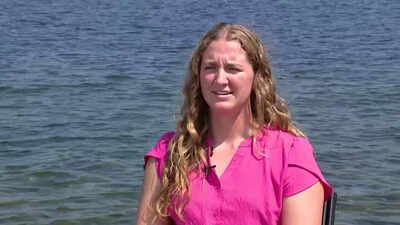
College student Lillie Vehling was reading beside Lake Washington while waiting for the Blue Angels; she saw three girls drowning and rescued them one by one

College student Lillie Vehling was reading beside Lake Washington while waiting for the Blue Angels; she saw three girls drowning and rescued them one by one

Lillie Vehling (Image Credit: YouTube/ KOMO News) College student Lillie Vehling was sitting near Lake Washington in Seattle, reading and waiting for the U.S. Navy Blue Angels air show during Seafair weekend when she noticed something alarming in the water. Three young girls were struggling to stay afloat beyond the buoy line. Vehling, who had…

Read More
In 1953, construction narrowed Cape Cod's Fresh Brook; a concrete weir then blocked sea-run brook trout from their spawning grounds, and 73 years later it is set to be removed to bring the native trout back

In 1953, construction narrowed Cape Cod’s Fresh Brook; a concrete weir then blocked sea-run brook trout from their spawning grounds, and 73 years later it is set to be removed to bring the native trout back

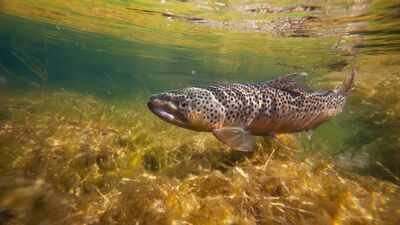
Trout representative image For more than seven decades, a quiet stream in Wellfleet, Massachusetts, has been held back by a concrete barrier. Fresh Brook, once known as “Trout Brook,” was a thriving habitat for native sea-run brook trout, locally called “salters”, until the early 1950s. Anglers from across the country travelled to Cape Cod to…

Read More
Colorado city uses 15-minute water data from smart meters to catch illegal lawn watering during drought

Colorado city uses 15-minute water data from smart meters to catch illegal lawn watering during drought

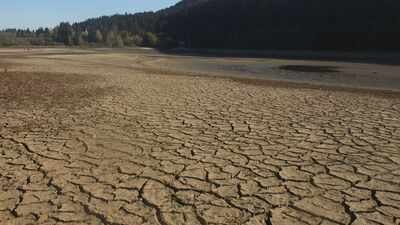
Aurora, Colorado, is using smart water meters to enforce drought rules as the city faces severe water shortages. The meters track water use throughout the day. This allows Aurora Water, the city’s municipal utility department, to identify lawns being watered outside the permitted schedule.Under the city’s current Stage 1 drought restrictions, grass can be watered…

Read More
One Last Act of Kindness: A Minnesota church closed after its congregation fell to 26 members, then gave about $600,000 to nonprofits and sold its property for affordable housing

A Minnesota church closed after its congregation fell to 26 members, then gave about $600,000 to nonprofits and sold its property for affordable housing

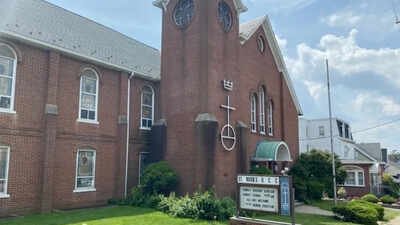
Image Credit: stmarksuccallentown.org After its congregation dwindled to just 26 members, St. Mark’s United Church of Christ in Bloomington, Minnesota, made the difficult decision to close, turning its final chapter into an extraordinary act of generosity. According to Minnesota nonprofit Loaves & Fishes, which provides meals to people facing hunger, St. Mark’s distributed about $600,000…

Read More
Quote of the day by Bubba Smith: "Well, I'm not a violent person. You have to back off. People sometimes will…" - a lesson in restraint, self-control and knowing when to step back

Quote of the day by Bubba Smith: “Well, I’m not a violent person. You have to back off. People sometimes will…”

Quote of the day by Bubba Smith (Image: Wikipedia) Some people assume that physical size or obvious strength naturally comes with a short temper. Bubba Smith, the former NFL defensive lineman turned actor, suggested something closer to the opposite. “Well, I’m not a violent person,” he said. “You have to back off. People sometimes will…

Read More
Louisiana created 1,170 acres of new wetlands in Barataria Basin; one year later, shrimp and crabs are returning to the restored habitat

Louisiana created 1,170 acres of new wetlands in Barataria Basin; one year later, shrimp and crabs are returning to the restored habitat

One year after Louisiana restored 1,170 acres of wetlands, shrimp, crabs and red drum are returning to the habitat. Louisiana’s coastline is showing early signs of recovery after a major wetland restoration project created 1,170 acres of new marsh habitat in the Barataria Basin. Just one year after construction, species including white and brown shrimp,…

Read More
In 2025, Virginia spent $8 million rebuilding 1.09 miles of Ragged Island shoreline; the project created 2.6 acres of new marsh and 2.2 acres of oyster reef while cutting hundreds of tons of sediment entering Chesapeake Bay

In 2025, Virginia spent $8 million rebuilding 1.09 miles of Ragged Island shoreline; the project created 2.6 acres of new marsh and 2.2 acres of oyster reef while cutting hundreds of tons of sediment entering Chesapeake Bay

Virginia’s Ragged Island restoration is creating new marsh and oyster habitat while reducing sediment entering Chesapeake Bay. Virginia has completed a major shoreline restoration project on Ragged Island, helping rebuild wetlands and oyster habitat while reducing the amount of sediment and nutrients entering the Chesapeake Bay.The project, funded with $8 million from NOAA Fisheries’ Office…

Read More