Kudzu was brought to America as a garden plant; scientists now warn its tangled vines can become wildfire fuel

Kudzu was brought to America as a garden plant; scientists now warn its tangled vines can become wildfire fuel | World News

Kudzu arrived in the United States as an ornamental vine more than a century ago, first displayed at the Philadelphia Centennial Exposition in 1876 before being promoted for shade, livestock forage and erosion control. What began as a useful garden and agricultural plant eventually spread far beyond where it was intended, covering forests, roadsides and…

Read More
In 1962, five pet mute swans escaped in Maryland; within four decades their descendants neared 4,000 and were eating 10.5 million pounds of Chesapeake Bay grasses a year

In 1962, five pet mute swans escaped in Maryland; within four decades their descendants neared 4,000 and were eating 10.5 million pounds of Chesapeake Bay grasses a year

The exotic mute swan has increased its population size in Chesapeake Bay to approximately 4,500 since 1962. In 1962, five mute swans escaped from an estate in Talbot County, Maryland. More than four decades later, their descendants had grown to nearly 4,000 in the Chesapeake Bay region. As their numbers rose across the Chesapeake Bay…

Read More
In the 1930s, Florida introduced rhesus macaques to boost tourism; today the invasive monkeys carry a potentially fatal virus and are considered a public-health concern

In the 1930s, Florida introduced rhesus macaques to boost tourism; today the invasive monkeys carry a potentially fatal virus and are considered a public-health concern

Nonhuman primates (NHPs) can harbour multiple zoonotic pathogens owing to their close phylogenetic relationship and frequent interactions with humans. They can also be extremely successful ecological invaders. Within the United States, fewer than or equal to NHP species have been introduced and of them, the rhesus macaque has successfully established populations in Florida and Puerto…

Read More
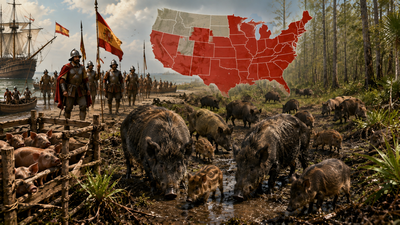
Spanish explorers brought pigs to America for food in the 1500s; today, millions of feral swine roam at least 35 US states

Spanish explorers brought pigs to America for food in the 1500s; today, millions of feral swine roam at least 35 US states

When Spanish explorers brought pigs to what is now the southeastern United States in the 1500s, the animals were intended as a practical source of food rather than a threat to native ecosystems. Centuries of escapes, free-ranging livestock and later introductions of Eurasian wild boar changed that. According to the US Department of Agriculture’s Animal…

Read More
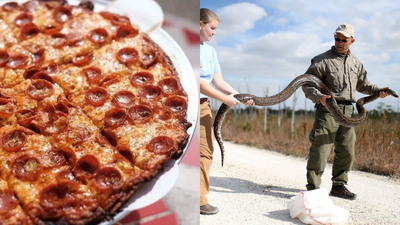
Bring a python, get a pizza: A Florida restaurant is giving away free 'python pizza' if you bring a Burmese python caught in the Everglades

Bring a python, get a pizza: A Florida restaurant is giving away free ‘python pizza’ if you bring a Burmese python caught in the Everglades | World News

A Florida restaurant has launched one of the country’s most unusual food promotions, offering customers a free ‘python pizza’ if they bring in an invasive Burmese python captured during the 2026 Florida Python Challenge. The giveaway, introduced by Wildman’s Pizza in Everglades City, is designed to support efforts to remove the destructive snakes from the…

Read More