
A painting that once cost American artist Julian Alden Weir $560 ended up helping him acquire something far more lasting, a 153-acre farm in Connecticut.In July 1882, Weir exchanged the painting and $10 for the Branchville property, a deal that would shape much of the rest of his artistic life. He went on to make the farm his primary residence for the next 36 years, building a studio there and using its fields, woods and rocky landscape as subjects for his work.More than a century later, the property became part of Weir Farm National Historical Park, preserving the home, studio and landscape where Weir and other artists worked. The National Park Service describes the site as the only National Historical Park dedicated to preserving the home, studio and grounds of a late 19th-century American artist.The original 153-acre farm has since been reduced in size, with the present-day park encompassing a 68-acre site. But the connection between the landscape and the art created there remains central to the park.
The unusual deal that changed Weir’s life
The story began when art collector Erwin Davis wanted a painting Weir had acquired in Europe.At the time, Weir was living in New York, working as a portrait and still-life painter, teaching at the Art Students League and buying art for himself and other collectors.Davis offered him a farm in Branchville in exchange for the painting and an additional $10.Weir travelled to see the property before making his decision. In a June 1882 letter to his fiancée, Anna Dwight Baker, he wrote that he wanted to see whether the acreage was habitable and whether it could serve as a retreat.On July 19, 1882, the deal was completed. Weir received the Branchville farm in exchange for the painting and $10.What may initially have looked like a simple retreat soon became much more important to the artist.After marrying Baker the following year, Weir returned to the United States from their honeymoon in Europe and made Branchville his primary residence for the next three and a half decades.
Who was Julian Alden Weir?
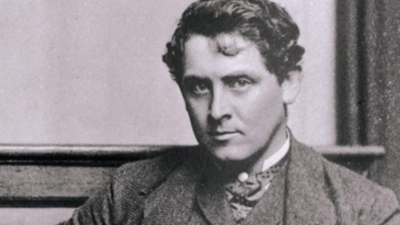
Born on August 30, 1852, in West Point, New York, according to NPS, Weir grew up in a family deeply connected to art.His father, Robert Walter Weir, was a painter and professor of drawing at the US Military Academy. His older brother, John Ferguson Weir, also became a prominent artist and later served as the first director of the Yale School of Fine Arts.Julian enrolled at New York’s National Academy of Design at 17 before travelling to Europe. Between 1873 and 1877, he studied primarily at the École des Beaux-Arts in Paris, where he also studied under painter Jean-Léon Gérôme.After returning to New York, Weir established himself as a painter and teacher. His work initially focused on portraits and still lifes, but his approach changed after he settled at Branchville.The Connecticut landscape gradually became central to his work.
The farm became his artistic laboratory
At Branchville, Weir began moving away from the conventional artistic approach he had learned during his training.He experimented with etching and developed a more personal approach to landscape painting, drawing influence from Japanese art and French Impressionism.The farm provided him with an endless supply of subjects.Fields, trees, stone walls, barns and changing light appeared repeatedly in his work. The landscape was not simply the setting around his home. It became part of the way he thought about painting.Weir also built a studio on the property and expanded the farmhouse several times.The farm soon became a gathering place for other artists. Childe Hassam, John Twachtman, Albert Pinkham Ryder and other artists visited, spending time painting, fishing, hunting and discussing art.In the late 1890s, Weir and Hassam, Twachtman and seven other artists formed the group known as the “Ten American Painters”. The group sought an alternative to the established exhibition system and became associated with the development of American Impressionism.
The artistic legacy continued after Weir’s death
Weir died in 1919, but the artistic life of the property did not end with him.His daughter Dorothy Weir Young became an artist herself. She and her husband, sculptor Mahonri Young, later carried on the artistic tradition at the farm.New England painters Sperry and Doris Andrews followed them, extending the site’s connection with working artists across generations.That continuity is one reason the property eventually became significant beyond Weir’s own paintings.The National Park Service says the landscape was integral to Weir’s artistic vision and to the development of a national style of painting. Today, the park’s permanent collection contains more than 300 works, including paintings by Weir and Sperry Andrews and sculptures by Mahonri Young.
From private farm to protected artistic landscape
The transformation from a private Connecticut farm to a National Historical Park took place long after Weir’s death.The site was established as a unit of the National Park System to preserve a significant place in the development of American Impressionism and maintain the landscape that inspired generations of artists.The present-day Weir Farm National Historical Park includes the historic home, studio and surrounding grounds. The National Park Service describes Weir House as containing original paintings, furnishings and decorative objects connected to the artists who lived there.The property’s importance, then, goes beyond the unusual price paid for it in 1882.A painting and $10 secured Weir a piece of Connecticut countryside. He spent decades turning that countryside into a source of paintings, a home for his family and a meeting place for artists.More than 140 years later, the same landscape survives as a place where visitors can encounter the home, studios and surroundings that helped shape Weir’s work and the wider story of American Impressionism.