

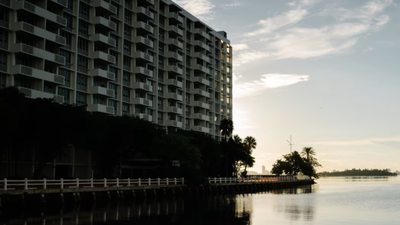
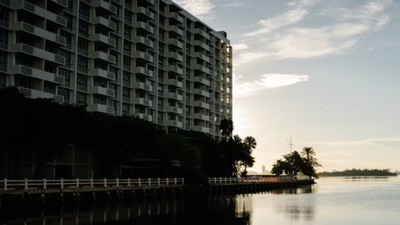
A three-year battle over a largely emptied Miami waterfront condominium has finally ended, clearing the way for a luxury redevelopment. The Wall Street Journal, which has followed the dispute since 2024, reported on September 1 that Two Roads Development and the remaining owners of units at Biscayne 21 reached an out-of-court settlement. Additional reporting by Commercial Observer and Miami Business Magazine confirms that the developer paid about $50 million for the remaining units, bringing the long-running standoff to an end.
How a Miami condo became a “zombie”
Biscayne 21, a waterfront condominium in Miami’s Edgewater neighborhood, was built in 1964. The 13-story building sits on roughly 3.5 acres along Biscayne Bay, making its land considerably more valuable to developers than the aging structure itself. In 2022, Two Roads Development began buying units in the building. It eventually acquired the vast majority, about 183 of the building’s 192 units, according to reporting on the dispute, with plans to demolish Biscayne 21 and replace it with a new luxury development. But a small group of owners refused to sell.That turned what might normally have been a straightforward condo buyout into a major legal battle over whether a developer controlling most of a building could change the rules and force its termination.
The owners who refused to leave
Among the holdouts was Angelica Avila, who had lived in her Biscayne 21 apartment for decades. Two Roads had offered her hundreds of thousands of dollars for her unit, but she refused to sell. Eventually, as the building’s services were shut down and portions of the property were stripped in anticipation of demolition, she and other residents were forced to leave.The building was left largely empty and uninhabitable, earning it the nickname “zombie condo.” A 2025 report by Realtor.com described the tower as standing empty after windows and other features had been removed while the legal dispute continued.
The legal fight changed everything
The central issue was the building’s condominium declaration. Biscayne 21’s original rules required unanimous approval to terminate the condominium. Two Roads, after gaining control of the association, sought to lower that threshold to 80%, allowing the developer to proceed despite the holdouts.The owners challenged the move in court. In 2025, Florida’s Third District Court of Appeal sided with the holdouts, finding that the change improperly affected their voting rights. The Florida Supreme Court later declined to review the case, leaving the appellate ruling in place.The dispute took another dramatic turn in January 2026, when a Miami-Dade judge ordered the developer to restore the condominium to a habitable condition, including its utilities and other essential systems. For a developer preparing to demolish the building, the ruling created a costly and complicated roadblock.
A $50 million settlement changes the outcome
After years of litigation, the two sides have now reached an agreement. According to Commercial Observer, Two Roads paid $50 million for the remaining units. Miami Business Magazine also reported that a source put the purchase price at roughly $50 million, although the developer did not publicly disclose the combined amount it paid.The settlement gives Two Roads complete control of the site and allows it to move forward with its redevelopment plans. The holdout owners, meanwhile, will leave the property with compensation after years of fighting to retain their homes.
A 55-story tower is waiting
Two Roads plans to replace Biscayne 21 with EDITION Residences, Miami Edgewater, a 55-story luxury condominium tower with 185 residences. The project is part of a larger planned development on the waterfront site. The proposed tower is expected to rise about 649 feet and carry the EDITION brand associated with Marriott International. The developer has said demolition could begin within weeks now that the legal dispute has been resolved.
Why the case mattered beyond one building
The Biscayne 21 fight became closely watched because it raised a much broader question in Florida’s rapidly changing condominium market: how much power should developers have to buy up aging buildings and replace them with new projects when a handful of owners refuse to sell? For years, the holdouts had appeared to have blocked one of Miami’s most ambitious waterfront redevelopment plans. Now, after a court battle, an emptied building and a reported $50 million settlement, the standoff is over. The “zombie condo” that became a symbol of the fight is finally set to disappear, making way for the luxury tower that started the battle in the first place.