
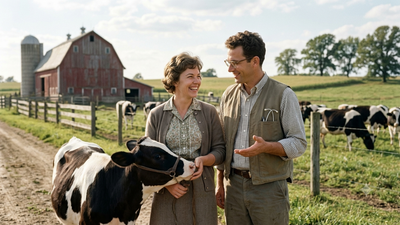
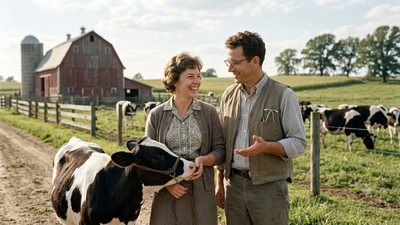
In February 1969, Beth Temple agreed to meet a surgeon she had never met after colleagues decided the two might suit each other. Beth was a young mother and teacher. Dr Arvid Temple was an older doctor with a dairy farm in eastern Will County, Illinois, which he had bought several years earlier. They married that May, and the farm gradually became part of their shared life. Arvid died in 2007, but Beth continued returning to the property and caring for it. As reported by Forest Preserve District of Will County, more than half a century after their first meeting, the 160-acre Tempest Farm is being protected for the future. The first 40 acres were donated to the Forest Preserve District in 2020, while the remaining 120 acres are under a conservation easement, with full transfer anticipated in the years ahead.
How a blind date led Beth to Arvid Temple and Tempest Farm
Beth’s colleagues had a simple idea when they arranged the meeting. They believed their friend, then a young teacher raising a two-year-old child, might get along with Arvid Temple, a surgeon.Reportedly, she agreed to the blind date in February 1969. Three months later, in May, they were married.By then, Arvid already had a strong attachment to a 160-acre property in Washington Township. He had bought the farm in 1965 and called it Tempest Farm, after a horse he had owned and loved before his medical career took him overseas.The farm was not simply a piece of land he happened to own. It became the setting for much of the couple’s life together, particularly at weekends. Beth eventually learned the practical work that came with it, from milking cattle and maintaining buildings to operating machinery and working with tools. She also planted nearly all the trees around the farm buildings, apart from one.
The childhood roots of Arvid Temple’s connection to farming
Arvid’s relationship with land went back to childhood. His parents had emigrated from Belarus, where Jewish people faced restrictions on owning land, and settled in Chicago. Their home had a small backyard shaded by cherry trees, leaving little useful space for growing plants. That modest garden seems to have stayed with him. When he was later able to buy property of his own, he chose a dairy farm.His first horse, Tempest, had a particular place in his memory. He had to sell the animal when he served as a doctor with the US Army during the Korean War in 1951. Later, he reused the name for another horse and even for a large German shepherd that Beth remembered as something of a lovable nuisance.Arvid’s route into medicine had not been straightforward either. He was unable to enter some Chicago medical schools because of restrictions on Jewish enrollment at the time. He eventually gained admission to Chicago Medical School, then served in the Army before moving into surgical training at veterans hospitals. That led to a medical career spanning about five decades.
Beth turned farm produce into help for local families
For Beth, learning the farm was part of learning the life she had chosen with Arvid. She milked cows, worked with a front-end loader and skill saw, tended crops and vegetables and helped keep the dairy buildings clean.There were less pleasant lessons, too. On one occasion, she was kicked by a cow while treating an infected teat. Another involved cleaning the milking barn so thoroughly that she accidentally removed the smells the cattle used to identify their usual places at the stanchions. The cows did not take kindly to the change. It took about two hours to get them settled back into their usual positions.The couple also grew food that they passed on to people who needed it. Some of the produce went to Respond Now, a social service organisation serving people in the Chicago Heights area. For Beth, that work reflected something she had learned from her husband. Arvid, she said, had shown her the importance of looking after other people.
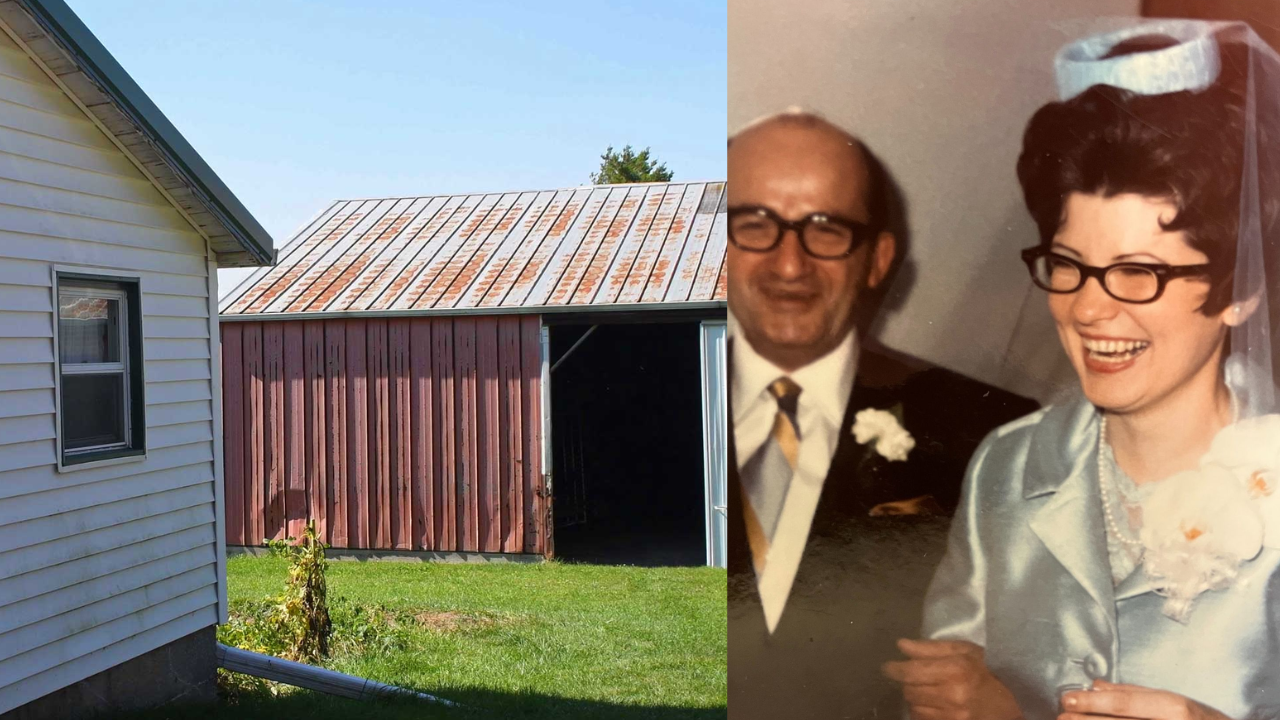
PC: Forest Preserve District of Will County
After Arvid’s death, Beth continued her life at Tempest Farm
Arvid died in July 2007, but Beth continued to spend time at Tempest Farm. After his death, she took on a project inside the old chicken coop. With help from friends who worked as carpenters, she began stripping out and reorganising the building. The work took around five years. It eventually became a workshop and storage space, holding gardening and woodworking equipment, automotive supplies, crafting materials and other tools. There is also a warm area for the farm’s cats. Photographs of Arvid and reminders of his medical career remain inside.Beth still uses the building in winter, when a portable heater allows her to paint, make toys or read the newspaper. During warmer months, she tends to stop there only for lunch before heading back outside. The farm continues to hold reminders of the couple’s years together. The buildings, trees and working spaces are physical traces of a life that was shared there for decades.
How 160 acres of Tempest Farm are being preserved for the future
The first 40 acres of Tempest Farm were donated to the Forest Preserve District in 2020, with the intention that the land would remain protected permanently. The remaining 120 acres, along South Yates Avenue east of Beecher, are under a conservation easement with the Forest Preserve District as beneficiary. Together, the arrangements are expected to make the 160-acre farm the largest land donation in the district’s history.The property is more than farmland. Trim and Pike creeks cross the site, while wetlands and areas of rich soil provide habitat for a range of wildlife. Among the species found there are salamanders, green frogs, tree frogs, barn swallows and tree swallows.The working farm buildings will also remain part of the property’s story. Arvid had gradually modernised parts of the operation, adding metal siding and roofs, improved milk-collection pipes and concrete around the cow yard to prevent cattle from standing in deep mud.
The conservation plan is helping preserve Beth and Arvid’s farm legacy
Beth sees the conservation arrangement as a way of keeping something of their life together in place. She has described Arvid as a person who listened carefully to others, a quality she considered unusual. His concern for people influenced his medical career, while his concern for those struggling financially was reflected in the food the couple gave away. Environmental protection mattered to him as well.That is why Beth believes he would have supported the decision to protect Tempest Farm rather than see the property eventually surrounded by development. Under the conservation arrangements, its future is intended to remain tied to agriculture, farming or use as a nature preserve. For Beth, that future does not erase the farm’s personal history. She still goes there because it is where she and Arvid spent so much of their time together.The blind date in 1969 led to a marriage that lasted until his death in 2007. The farm he bought four years before they met has now become part of the legacy they are leaving behind.