

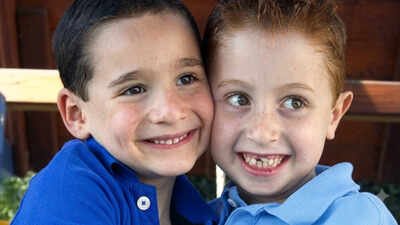
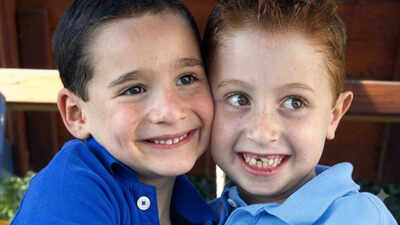
At the age of 6, Los Angeles boy Dylan Siegel decided he wanted to help his best friend, Jonah Pournazarian, who had a rare genetic disorder affecting his liver. When his mother suggested that he could raise money through a lemonade stand, Dylan had another idea. He wanted to write a book.The result was a 14-page illustrated booklet called Chocolate Bar. According to Jewish Journal, Dylan used the phrase “Chocolate Bar” to describe things he thought were great, including trips to Disneyland, the swimming pool, the aquarium and the bowling alley. He ended the book with a line about helping his friends.Dylan did not stop with writing the book. He worked with his parents to produce copies and started selling them to raise money for research into glycogen storage disease type 1B, the disorder affecting Jonah. The book was sold for $20, while chocolate bars carrying the same design were also sold as part of the fundraising effort.The project began on a small scale in late 2012. Dylan and Jonah sold the books and chocolate bars at their school’s Mitzvah Day, where the effort raised about $7,000 for GSD research. As more people heard about the project through book fairs and television reports, the number of copies sold grew. By December 2014, Chocolate Bar had raised $1 million for research into the disease.
Jonah’s rare liver disorder
Jonah was one of a very small number of children living with glycogen storage disease type 1B. The Jewish Journal reported in January 2013 that fewer than 100 cases of type 1B had been identified in the United States at that time.Glycogen storage disease affects the way the body handles glycogen, the stored form of glucose. Normally, the body breaks down glycogen and converts it into energy. This process depends on enzymes. In people with GSD, problems with these enzymes can slow down or stop the process.There are 14 known categories of GSD. Type 1B is one of seven types that primarily affect the liver. In Jonah’s case, glucose was stored in his liver and could not properly get out, according to his doctor.The condition had a major effect on Jonah from the time he was born. He weighed 4 pounds at birth and was frequently ill. He had very low or barely detectable sugar and white blood cell counts, suffered from severe diarrhoea and sometimes woke up covered in sweat.His family later sought treatment from Dr David A. Weinstein, a paediatric endocrinologist at the University of Florida, Gainesville, who was working on GSD treatment and research. Medical consultations required Jonah and his family to travel to Florida.
Treatment meant living by the clock
By the time the Jewish Journal wrote about Jonah in 2013, his treatment required regular doses of cornstarch. The treatment had to be given through a surgically implanted feeding tube every three to four hours, including during the night.Jonah’s mother, Lora Pournazarian, described the routine saying, “We live by the clock.” She and her husband, Rabin Pournazarian, kept two alarm clocks in their bedroom, both set for 3am, so they could wake up and give Jonah his early-morning dose.Missing a feeding could have serious consequences. The Jewish Journal reported that the consequences could range from a short hospital stay to death.Jonah’s parents also tried to ensure that the disease did not stop him from living as normally as possible. During the 2013 report, he was described as playing Monopoly with a friend at home. His mother said the family did not describe him as sick or not normal.At school, his classmates had also adjusted to his medical needs. A medical aide was present with him full time and administered frequent blood tests.
Dylan turned friendship into fundraising
Dylan’s parents, Debra and David Siegel, were friends of Jonah’s parents and had already been involved in the Jonah Pournazarian Fund to Support Glycogen Storage Disease 1B research. The fund had raised $410,000 by January 2013.Dylan wanted to contribute in his own way. His mother initially suggested a lemonade stand, but Dylan said he wanted to write a book. She thought the idea might pass, but the next day he showed her the finished work.The book began with Dylan describing things he liked as “Chocolate Bar”, meaning something he considered very good. The booklet included his own writing and illustrations. Its final message connected the project to Jonah, “I like to help my friends, that is the biggest Chocolate Bar.”Dylan’s father helped with the production, and the first print run consisted of 200 copies. At the school’s Mitzvah Day in November 2012, Dylan and Jonah sold autographed books for $20 each. They also sold chocolate bars for $5.The first event raised about $7,000. After that, the project continued to grow. A second printing produced 300 copies and a third produced another 500. A Barnes & Noble book fair and television coverage helped bring more attention to the project.By January 2013, about 750 copies had been sold, while the combined proceeds from the books and chocolate bars had reached about $30,000.
$1 million reached in 2014
The fundraising continued after the early success. The ABC News report published on December 15, 2014, said Chocolate Bar had reached $1 million in book sales that week.The money was directed to the University of Florida laboratory where Weinstein led research into GSD. ABC News reported that every cent from the book went to the lab.The funds supported the hiring of a new geneticist and research that resulted in new gene-therapy treatments. ABC News also reported that the money helped keep the facility operating and on track towards a cure within several years.Dylan said he planned to continue raising money until a cure was found. His original idea at the age of 6 had grown from a small book project into a fundraising effort involving supporters across all 50 US states and more than 60 countries.