
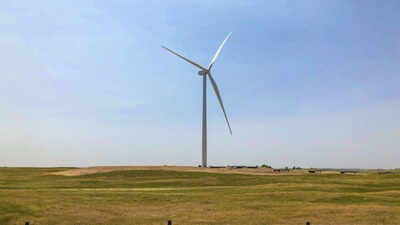
A farmer in Nebraska, United States, is earning additional income by leasing part of his agricultural land for a wind turbine. A wind energy company has leased his 160-acre property to install a wind turbine, but the turbine and its equipment take up only about one acre. The farmer can continue using the remaining 159 acres for agriculture.The financial difference is significant. According to the National Rural Electric Cooperative Association (NRECA), the company behind the project says a typical 30-year lease pays an average of $10,000 to $12,500 a year. In comparison, even a highly productive acre of corn might bring in around $600 annually. The figures were shared in a case study published by NRECA in July 2021.The wind turbine is part of a project in Cuming County, Nebraska, where a local electricity provider wanted to produce some of its own power instead of buying all its electricity from larger suppliers. The company, Bluestem Energy Solutions, installed the turbine in 2019 and sells the electricity it produces to Cuming County Public Power District (CCPPD), which serves homes and businesses in the area.
How does the farmer earn money?
Matt Robinette, vice president of development at Bluestem Energy Solutions, explained that the company signs leases covering the entire piece of land, even though it needs only a small area for the turbine. “The landowner is free to utilize the other 159 acres for whatever purposes they prefer,” Robinette said.The agreement lasts for 30 years, with an option to extend it. According to the company, a typical lease pays an average of $10,000 to $12,500 annually over this period. The payments start at a lower amount and gradually increase each year.Chet McWhorter, general manager of CCPPD, explained why the arrangement is financially attractive for the farmer. “Even if it was top dollar corn and the landowner was the best farmer in the world, he might be getting $600 an acre, so he’s doing very well with the lease,” McWhorter said.However, the $10,000 to $12,500 figure represents the company’s typical lease payments, not the confirmed annual income of this particular farmer.
Why wind turbine was installed on farmland?
The idea began in 2016 when CCPPD was negotiating a new electricity supply agreement. The district wanted to produce some electricity locally to reduce its dependence on outside suppliers and keep costs more predictable.It first explored solar power and even installed solar panels on its office building to see how well they worked.However, the area frequently experiences cloudy and rainy weather, making a larger solar project less financially attractive. Adding batteries to store solar electricity would also have been too expensive at the time.
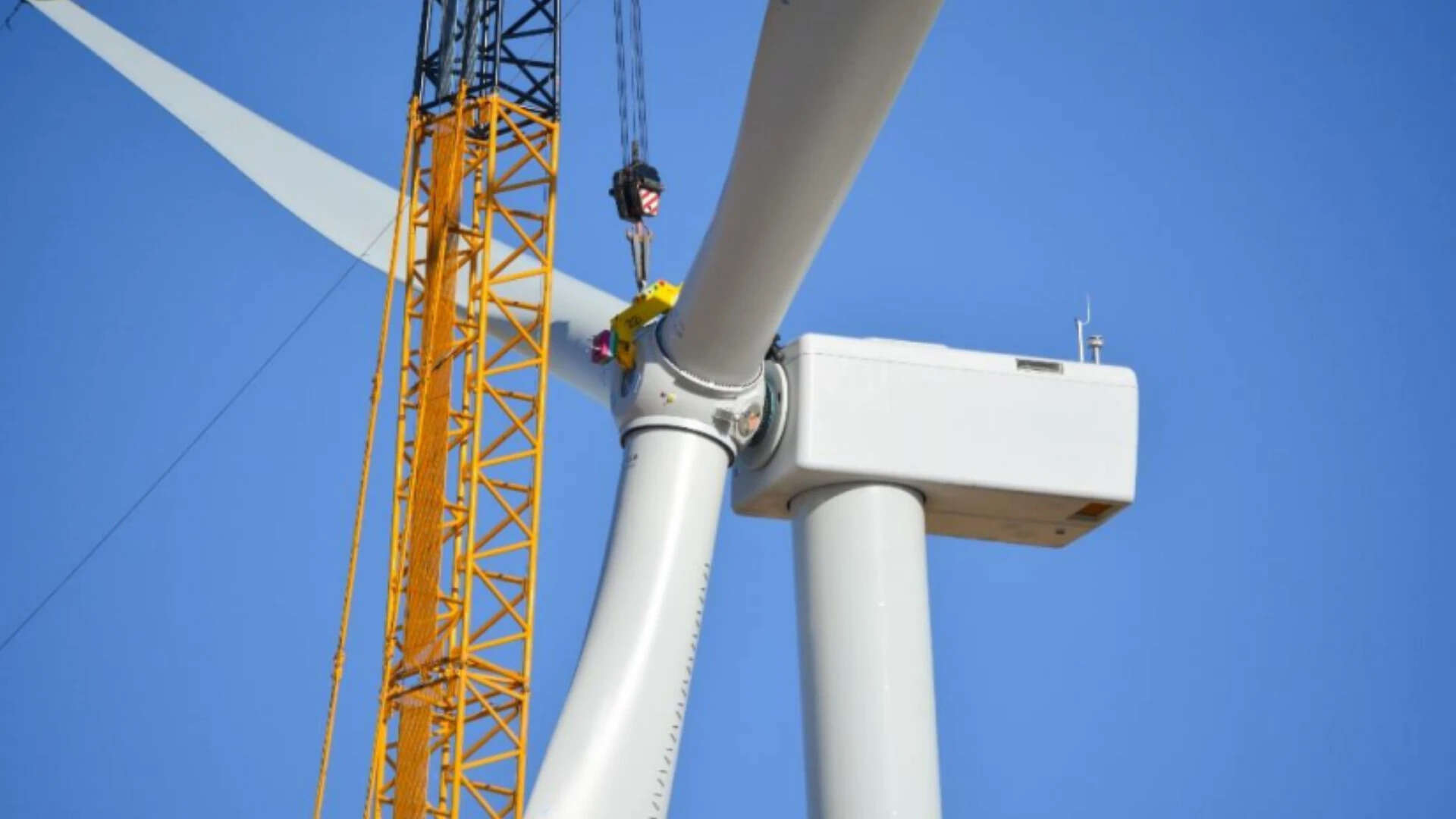
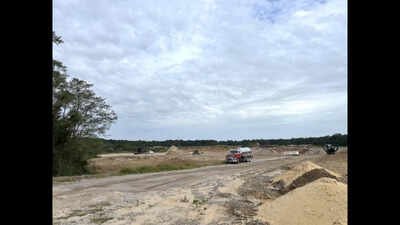
Rotor being installed on a wind turbine
The district then turned towards wind energy after one of its directors visited another wind turbine project in Nebraska.CCPPD initially considered owning a turbine itself, but the cost was too high. It eventually partnered with Bluestem Energy Solutions, which agreed to build, own and maintain the turbine.The project cost approximately $4.5 million, which Bluestem funded. CCPPD instead agreed to buy the electricity generated by the turbine for 30 years.
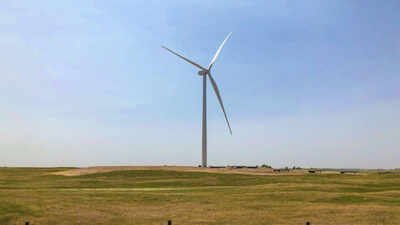
2.5 megawatts of electricity produced
The wind turbine installed in Cuming County is a General Electric model capable of producing up to 2.5 megawatts of electricity.It stands on an 89-metre tower and reaches approximately 152 metres when one of its blades points straight upwards.According to the NRECA case study, the turbine was expected to generate around 10,950 megawatt-hours of electricity each year. CCPPD estimated that this would be enough to supply electricity to more than 900 homes.The turbine sends electricity to a nearby power station, from where it is supplied to local customers. This means the district does not need to purchase the same amount of electricity from its larger supplier.The turbine recorded a capacity factor of 56.17% in 2020. In simple terms, this measures how much electricity it actually generated compared with what it could have produced if it had operated at full capacity throughout the year.
Benefits for the local community
The benefits extend beyond the farmer receiving lease payments. According to the 2021 case study, the turbine had helped CCPPD reduce its annual electricity costs by around 3% to 4%.The district also estimated that the project would contribute more than $1 million to the local economy over its 30-year life.It brings in approximately $11,000 in additional property taxes each year, with 60% of that money going to public schools.The project also supports local businesses when maintenance workers visit the area and spend money on hotels, fuel and food.Bluestem is responsible for maintaining the turbine, so CCPPD does not have to pay separately for repairs or regular servicing.Another advantage is that the electricity price is agreed upon in advance. While the cost of electricity purchased from other suppliers can change, the wind power agreement gives the district a clearer idea of what it will pay in the coming years. “The nice thing about wind is we know exactly what it’s going to cost,” McWhorter said.